Published projects
Predictors of mutability in healthy human tissues: link
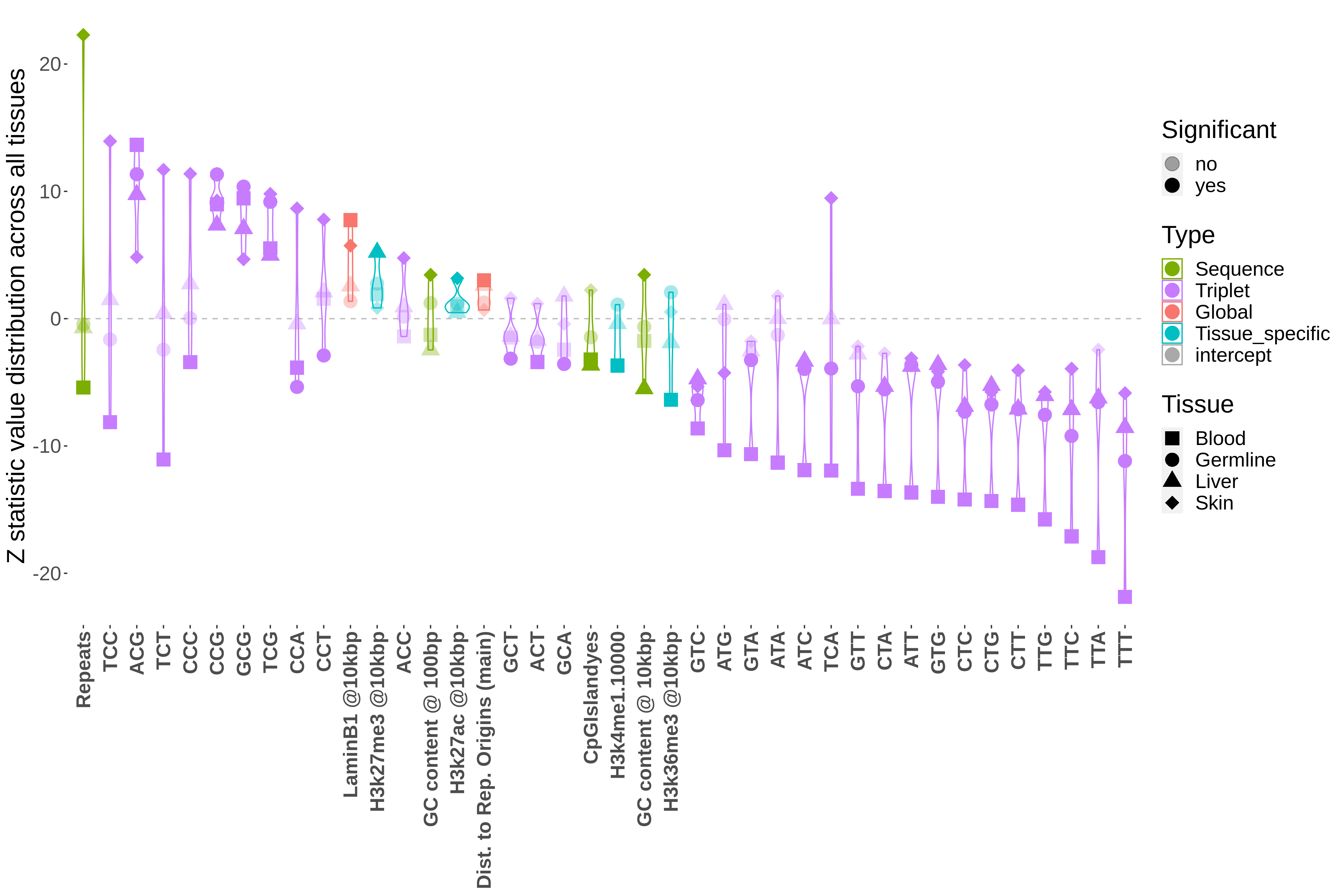 Ever wondered what causes mutation within you? The truth is that many processes and chemicals affect whether sites in the genome mutate, which includes the many molcules that exist innately within cells (ie. transcription machinery, epigenetic marks). In this paper I leverage data from prexisiting experiments and build machine learning models that predicts mutations in healthy tissues. I created highly accurate models (within 2% error), and explore the question: are the factors that predict mutation consistent across tissues, or do they differ?
How Sequence Context-Dependent Mutability Drives Mutation Rate Variation in the Genome: link
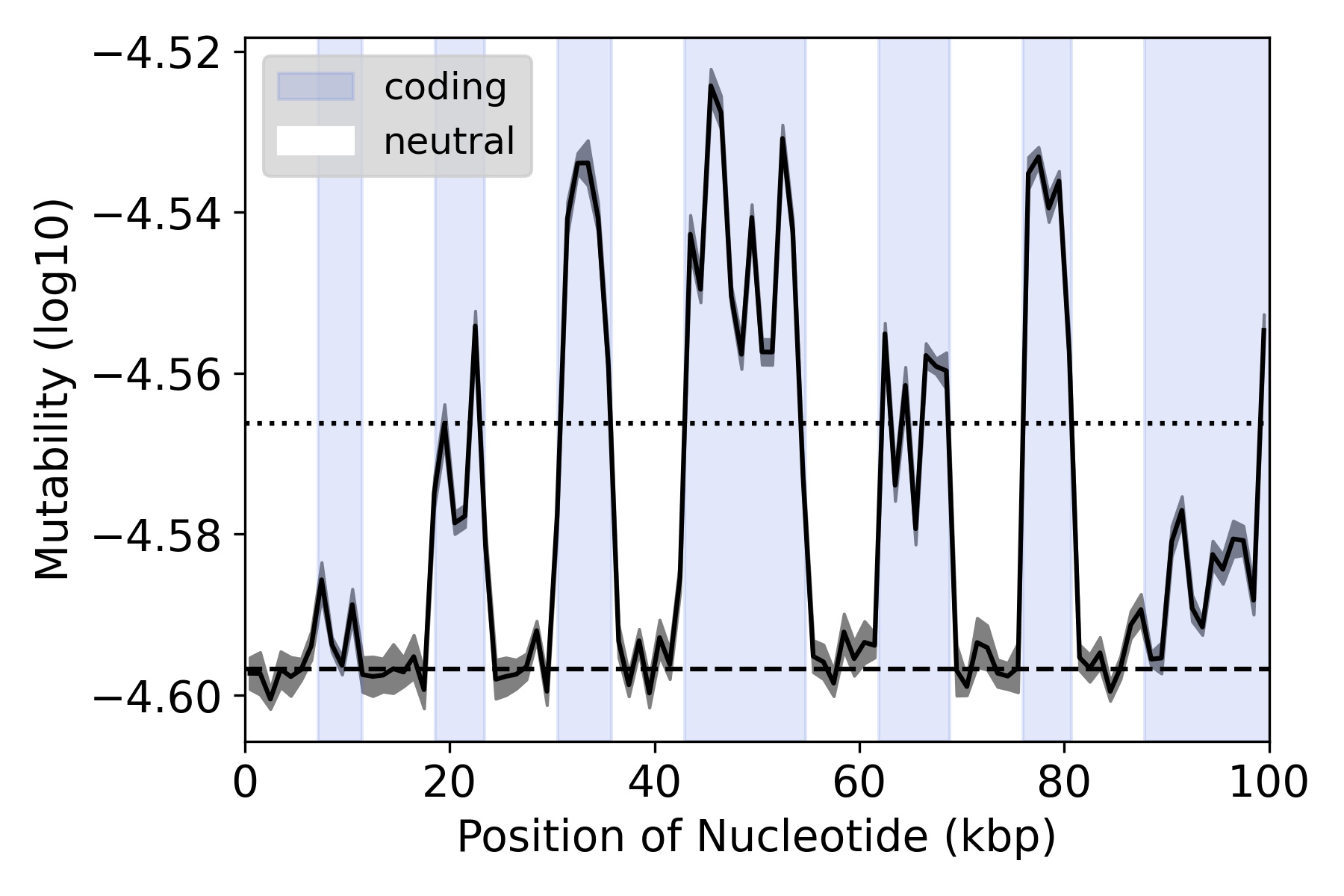 One of the main factors that affects the likelihood of a site to mutate is actually the DNA itself (i.e. is the site an A/T/C/G?). However when a site mutates, the base will change and therefore its likelihood to mutate in the future also changes. This raises interesting questions about how genetic sequences evolve over time, which I address here in this paper using simulated chromosomes.
Effects of urban-induced mutations on ecology, evolution and health : link
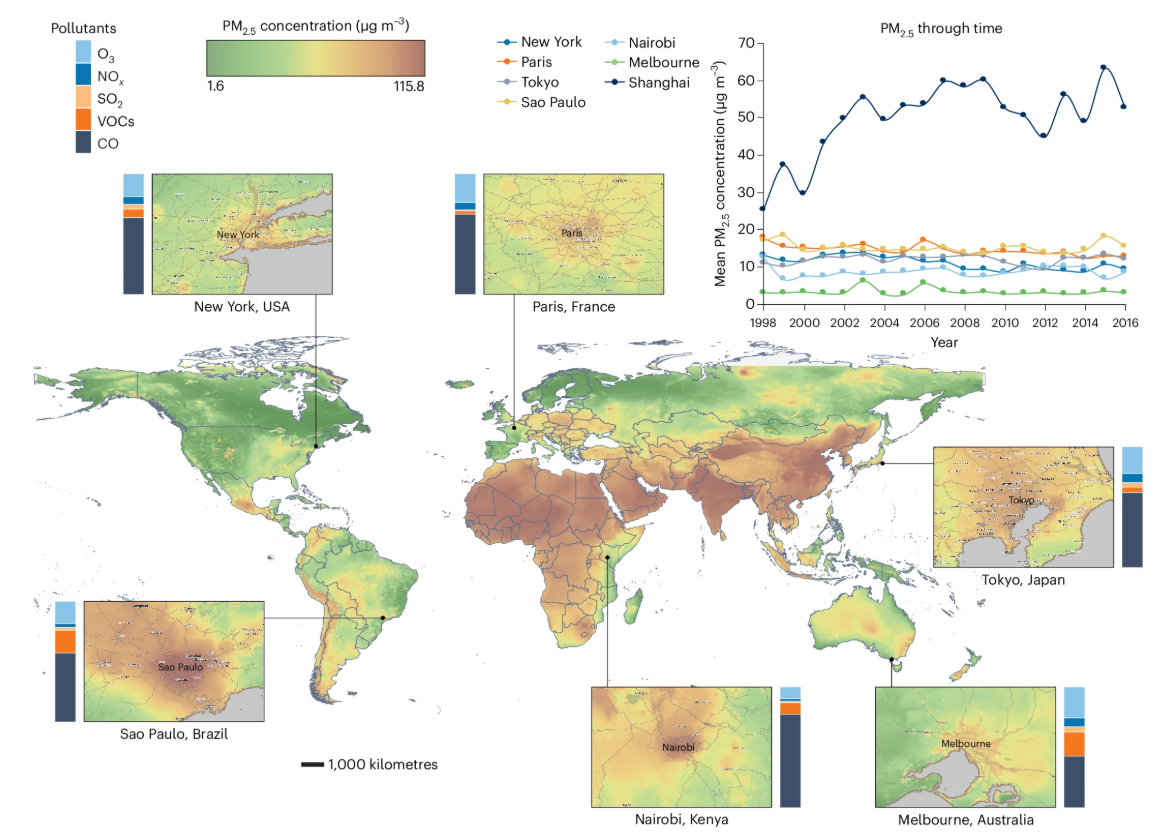 Urban pollution may increase mutation rates in city-dwelling organisms, potentially harming their health and reducing population growth. In this review, we analyze how netural, deleterious and beneficial mutations could drive rapid evolution, especially in species with short lifespans.